Forget the Story: The Rise of Entertainment That Just Wants You to Feel Something
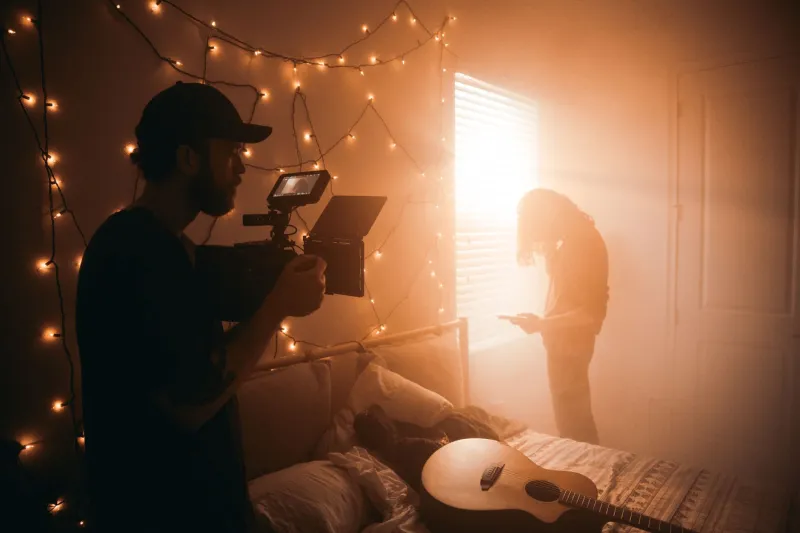
There's a specific kind of show that's doing really well right now. The pacing is slow and deliberate. The cinematography is gorgeous — all golden hour light and carefully chosen textures. The characters speak in a way that feels more like poetry than dialogue. Things happen, but not necessarily in a sequence that builds toward anything. And somehow, you watch the whole season in a weekend and feel vaguely moved by it, even if you couldn't tell someone what it was actually about.
This is not an accident. It is, in fact, the point.
The Vibe Has Replaced the Plot
For most of film and television history, story structure was the organizing principle. You had a protagonist with a want, obstacles in the way, escalating stakes, a climax, a resolution. Screenwriting teachers taught the three-act structure like it was physics. Audiences understood, almost intuitively, that stories were supposed to go somewhere.
Something shifted. It's hard to pin down exactly when, but you can feel it if you pay attention. The most talked-about prestige television of the last few years — The Bear, Euphoria, Slow Horses, even parts of Succession — prioritizes emotional texture over traditional narrative momentum. Characters don't always change. Plots don't always resolve. But the feeling of watching is so specific and so immersive that it doesn't seem to matter.
And on the lower-budget, algorithm-driven end of things, the shift is even more pronounced. "Cozy" content — slow TV, ambient streams, lo-fi aesthetics — has become a massive category in its own right. People watch hours of someone cooking in a quiet kitchen, or rain falling on a window, or a fictional character going through a peaceful daily routine. There's no narrative. There's barely any content in the traditional sense. There's just a sustained mood.
Why Audiences Stopped Demanding Answers
Some of this is a function of how we consume media now. Binge-watching changed our relationship to narrative tension. When the next episode is always immediately available, cliffhangers lose some of their power. You don't have to sit with unresolved questions for a week — you can resolve them in thirty seconds. That changes what "suspense" means and what you're actually watching for.
Social media changed it further. The clips that go viral aren't usually the plot-critical moments — they're the aesthetic ones. The shot composition that looks perfect as a screenshot. The line of dialogue that works as a standalone quote. The scene that captures a specific emotional frequency that people recognize and want to share. Content that's optimized for feeling travels better on social platforms than content that's optimized for narrative.
Hollywood noticed. Of course it did.
A 2022 analysis of streaming viewership data found that "atmosphere-driven" content — defined by slow pacing, high visual production value, and loose narrative structure — had significantly higher completion rates among 18-34 viewers than traditionally plotted dramas of similar length. People weren't just watching vibes-forward content; they were finishing it. That's the metric that matters to a streaming platform, and that metric is changing what gets greenlit.
The Screenplay Is Having an Identity Crisis
Talk to working screenwriters right now and you'll hear a version of the same thing: traditional story structure is increasingly being treated as a suggestion rather than a foundation. Development executives are asking for projects that "feel like" something — that have a specific aesthetic identity, a defined emotional register, a clear visual language — before they're asking about plot.
"What does this look like?" is now as important as "What happens?"
This isn't entirely new — auteur filmmaking has always prioritized vision over convention. But what's new is that commercial entertainment is now moving in this direction. The prestige TV space, the mid-budget film space, the music video and short-form content space — they're all increasingly rewarding creators who can nail a feeling over creators who can construct an airtight story.
For some writers and directors, this is liberating. It opens space for more impressionistic, personal work. For others, it's deeply frustrating — a sense that the craft of storytelling is being devalued in favor of something more like brand identity or aesthetic curation.
Both of those reactions are valid. The shift is real, and it's genuinely complicated.
The Comfort Argument
Here's the case for vibes-driven entertainment that I think deserves to be taken seriously: maybe plot-heavy, resolution-focused storytelling was never the only valid form, and we're just now creating the cultural and commercial space for alternatives.
Not every piece of art needs to make an argument or resolve a conflict. Music doesn't operate that way — an ambient album doesn't have a three-act structure and nobody complains that it doesn't go anywhere. Poetry doesn't operate that way. Visual art doesn't operate that way. Why should all screen entertainment be held to a narrative standard that other art forms don't even attempt?
There's also something to be said for entertainment that meets people where they are emotionally rather than demanding their full cognitive engagement. After a 10-hour workday, sometimes what you need is something beautiful and slow that asks nothing of you. That's a legitimate need. Content that fills it is serving a real purpose.
The Concern That Keeps Nagging
But here's what I can't fully shake: there's a difference between choosing a slower, more atmospheric storytelling style as an artistic decision and defaulting to vibes because they're easier to produce, harder to criticize, and more algorithmically rewarding than actual narrative craft.
A story that doesn't go anywhere can be a deliberate artistic choice. It can also be a story that nobody figured out how to finish. A show with stunning cinematography and no real plot can be visionary. It can also be a show that got greenlit because it looked great in the pitch deck and nobody asked hard questions about what it was actually saying.
The aesthetic can be a disguise for the absence of substance. And because vibes are, by nature, subjective — hard to critique, easy to defend with "it's not supposed to be that kind of show" — they're also a convenient shield against accountability.
The best entertainment happening right now manages to do both things: it has a specific, immersive aesthetic identity and it has something to say, somewhere to go, a reason to exist beyond looking good. The Bear is relentlessly atmospheric and also a precise, devastating story about grief and ambition. Those things aren't in opposition.
The question isn't whether mood and feeling belong in entertainment. They absolutely do. The question is whether we've started accepting mood and feeling instead of story, and whether we'll notice the difference when we look back at what we spent all those hours watching.