When Teaming Up Becomes a Survival Strategy: The Dark Side of Creator Collabs
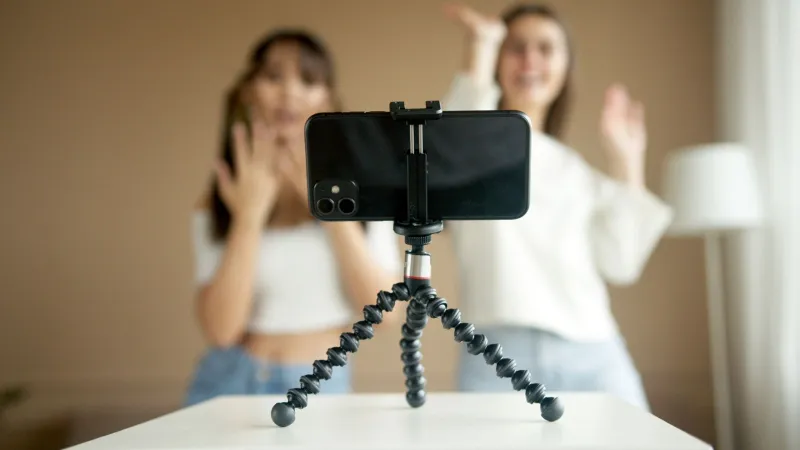
There's a specific kind of video that's everywhere right now. Two creators, usually sitting across from each other in a suspiciously well-lit studio, laughing a little too easily, hyping each other up a little too hard. The chemistry feels engineered. The conversation hits all the right beats. And by the end, you've been introduced to someone new — which was, of course, the whole point.
Collaborations aren't new. Musicians have always featured each other. Directors have always pulled from the same talent pool. Artists have always borrowed from their peers. But something has shifted in the last few years, and if you spend any real time in the creator economy, you can feel it. Collabs have moved from being a creative impulse to being a content strategy. And that distinction matters more than most people want to admit.
How We Got Here
The mechanics are pretty easy to trace. Platforms like YouTube, TikTok, and Instagram reward content that generates engagement quickly and consistently. Algorithms favor novelty — new faces, new formats, new combinations. A creator who collaborates gets exposed to an entirely new audience without having to build from scratch. That's an enormous advantage in a landscape where organic growth has become brutally slow.
So naturally, creators started treating collabs the way brands treat product launches. You map out the audience overlap, assess the optics, time the release for maximum visibility, and move on to the next one. Some of the bigger names in the YouTube and podcast space have turned this into something resembling a full-time operation — a rotating cast of guests and co-creators cycling through their content on a near-weekly basis.
The result is what some people in the industry have started calling the collab industrial complex. It's not one company or one platform — it's a whole ecosystem of mutual promotion dressed up as creative partnership.
What Gets Lost in the Transaction
Here's the thing about genuine creative partnerships: they're kind of weird. They're uneven. They take time to develop. The best ones — think Tina Fey and Amy Poehler, or the Coen Brothers, or even early-era YouTube collabs that felt genuinely spontaneous — work because both people bring something specific and irreplaceable to the table. There's friction, negotiation, compromise. And out of that messiness comes something neither person could have made alone.
Manufactured collabs skip all of that. They're optimized for reach, not resonance. Two creators show up, hit their marks, drop each other's handles in the caption, and call it a partnership. The audience gets introduced to someone new. The algorithm gets fed. Everyone goes home.
But audiences aren't stupid. There's a reason so many of these collabs feel hollow even when they're technically well-produced. You can sense when two people are genuinely interested in each other versus when they're performing interest because it's good for their metrics. That distinction is increasingly hard to fake, even with great editing.
The Pressure to Co-Brand Constantly
What makes this particularly complicated is that the pressure to collaborate isn't just external — it's internalized. Creators who've been in the game long enough know that going solo for too long can feel like career stagnation. If you're not showing up in someone else's content, you're not growing. If you're not bringing new faces to your platform, you're not relevant.
This creates a kind of anxiety that's unique to the modern creator economy. Solo work — the stuff that used to be the whole point — starts to feel insufficient. A deeply personal essay, a carefully crafted video made entirely on your own terms, a project that doesn't involve anyone else: these things can feel like they're missing something, even when they're genuinely good.
That's a problem. Because the whole reason most people got into creative work in the first place was to make something that felt like them. When the industry starts conditioning you to believe that your individual voice isn't enough on its own, something important gets eroded.
Can Authentic Partnerships Still Exist?
The honest answer is yes — but they require a lot more intentionality than they used to.
Authentic creative partnerships still happen. They're just harder to sustain in an environment where the transactional version is so much easier and so much more immediately rewarding. The creators who manage to pull it off tend to share a few things in common: they're selective about who they work with, they take their time, and they're willing to make something that doesn't perform perfectly if it means the work is actually good.
They also tend to be honest about the difference between a collab and a friendship. Not every person you make content with has to be your creative soulmate. But there's a big difference between a one-off guest appearance and a genuine ongoing partnership — and conflating the two is how you end up feeling like every professional relationship in your life is transactional.
What Audiences Actually Want
Here's an underrated truth: audiences can tell the difference, and they care. The collabs that genuinely resonate — the ones people talk about, share, revisit — almost always have something real underneath them. A shared history, a complementary worldview, a creative tension that produces something unexpected. That's not something you can manufacture on a content calendar.
And increasingly, audiences are getting fatigued by the manufactured version. There's a growing appetite for solo work, for creators who trust their own voice enough to not need constant co-signers. Some of the most engaged communities online right now are built around creators who make deeply personal, largely unfiltered content with minimal outside collaboration.
That's not a signal to abandon partnerships altogether. It's a signal that the collab industrial complex might be approaching its ceiling.
The Bottom Line
Collaborating with other creators can be genuinely wonderful. It can expand your perspective, push your work in unexpected directions, and introduce you to audiences who needed to find you. None of that is going away, and none of it is inherently bad.
But when teaming up becomes a survival reflex rather than a creative choice, something gets lost. The work gets thinner. The relationships feel hollow. And the creators who were supposed to be building something meaningful end up on a hamster wheel of mutual promotion, wondering when they last made something that felt entirely like their own.
The most sustainable version of a creative career — the kind that actually lasts — is one where you know the difference between a collab that serves the work and one that just serves the algorithm. That line is worth protecting, even when the pressure to blur it is coming from every direction.