We Didn't Even Like It That Much: The Strange Business of Rebooting Mediocre Memories
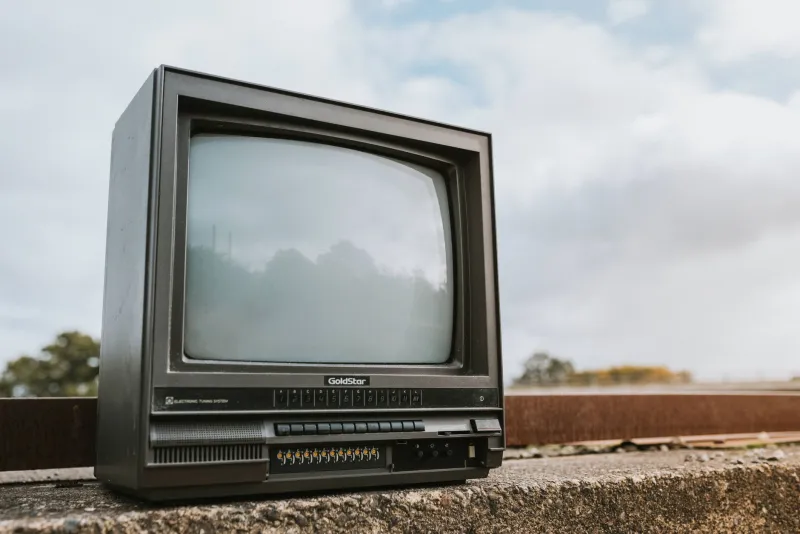
Let's be honest with each other for a second. When the Lizzie McGuire reboot got announced, how many of us actually remembered more than three episodes of the original? When Saved by the Bell came back, did anyone genuinely ache for it? And yet — we clicked. We streamed. We argued about it on Twitter like it personally meant something to us.
That's the whole game now. And it's worth asking who's winning it.
The Reboot Economy Is Not About Quality
Here's something the entertainment industry figured out a while ago: nostalgia doesn't require a great original product. It just requires a familiar one. A 2023 report from Nielsen found that catalog content — older titles and legacy IP — consistently outperforms new originals on streaming platforms in terms of total hours viewed. Audiences return to the known. That's not a moral failing; it's just how human brains work under stress.
And we have been, to put it gently, under a lot of stress.
Studios aren't mining the '90s and early 2000s because that era produced the greatest art. They're mining it because the people who grew up then are now in their 30s and 40s — the exact demographic with disposable income and subscription fatigue who will absolutely pay to feel twelve again for forty-five minutes. The nostalgia industrial complex isn't sentimental. It's actuarial.
Between 2015 and 2023, Hollywood greenlit over 150 reboots, sequels, and reimaginings of pre-existing IP. The success rate was inconsistent at best. Cobra Kai genuinely worked. The Gossip Girl reboot largely didn't. Bel-Air found an interesting lane. Most of the others landed somewhere between forgettable and mildly embarrassing. But here's the thing — even the bad ones got watched. Even the ones that got dragged online still drove subscriber numbers.
What We're Actually Searching For
There's a psychological concept called "temporal self-appraisal" — basically, the idea that we tend to remember our past selves more fondly when the present feels uncertain. Researchers at the University of Southampton found that nostalgia functions as a kind of emotional regulation tool, something people reach for when they feel disconnected or anxious. It's not about the content. It's about the feeling the content used to give you.
So when someone in 2025 boots up a reboot of a show they half-watched in middle school, they're not really looking for good television. They're looking for the version of themselves that didn't have a mortgage. They want the bedroom, the snack, the specific quality of afternoon light that came through the window when life felt more manageable.
The reboot is just the vessel. The real product is emotional time travel.
And studios know this. Which is why the marketing for these projects is almost never about the new story — it's always about the cast reunion photo. The original theme song playing over the trailer. The wink to the audience that says we remember too. It's a transaction built entirely on shared memory, not shared excitement about what's new.
The FOMO Factor Nobody Talks About
There's another piece of this that gets less attention: the social pressure of nostalgia. When a reboot drops and becomes a cultural moment — even a mocking one — opting out feels like missing something. You can't participate in the conversation about how bad the Sex and the City continuation was if you didn't watch it. The discourse is the event.
This is a relatively new phenomenon. Before social media, you could skip a bad movie and just not bring it up. Now, cultural consumption is a social activity in real time, and skipping something means sitting out a shared experience. Studios have gotten very good at manufacturing that shared experience around legacy IP, because the built-in audience recognition makes the social activation faster and louder.
FOMO, it turns out, is just as powerful as genuine enthusiasm. Maybe more powerful, because it doesn't require the product to actually be good.
Are We Getting What We Paid For?
Honestly? Sometimes. Cobra Kai turned a cheesy '80s movie into a genuinely compelling multi-season drama about masculinity and inherited trauma. The Scream franchise found a smart meta-commentary angle that gave the IP new teeth. Beavis and Butt-Head Do the Universe was funnier than it had any right to be.
But for every one of those, there are five projects that exist purely as brand exercises. They're not trying to tell a new story. They're trying to remind you that you once loved something and then sell you a streaming subscription on the strength of that memory.
The question isn't whether nostalgia-driven content can be good. It clearly can. The question is whether the industry's over-reliance on it is crowding out the space for genuinely new ideas — stories that don't have a built-in audience yet, characters nobody recognizes, worlds we haven't visited before.
Because here's what the reboot economy quietly costs us: every dollar and development slot that goes to a '90s IP revival is a dollar and a slot not going to something that doesn't exist yet. And the things that don't exist yet are the only things that can actually become the next thing someone wants to reboot in 30 years.
The Cycle Eats Itself
There's a real irony at the center of all this. The original shows we keep rebooting — Fresh Prince, Rugrats, Mighty Morphin Power Rangers — were themselves often new, weird, and risky when they first aired. Nobody had seen them before. They became beloved because they were different.
The nostalgia industrial complex is, in a sense, trying to manufacture the feeling of discovery by recycling the products of actual discovery. It's a copy of an emotion, not the emotion itself. And most people can feel that gap, even if they can't name it — which might explain why so many reboots get watched but not loved.
We keep showing up because we're hoping it'll feel like it used to. It almost never does. And we keep coming back anyway.
Maybe that's the most human thing about all of it.