When the Look Is the Work: How Aesthetic Became the New Talent
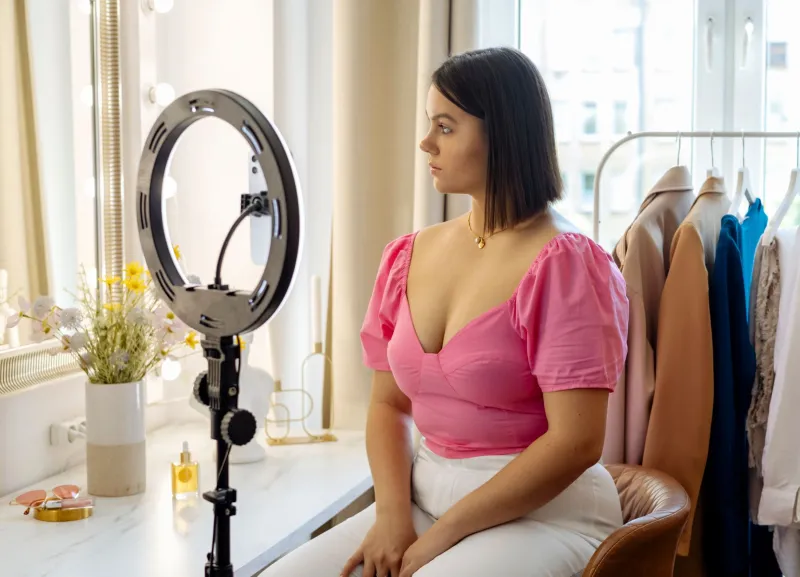
There's a particular kind of frustration that hits when you stumble across a creator with a gorgeous feed, a distinct color palette, impeccable lighting, and content that is — if you're being honest — pretty thin. And then you look at their follower count and feel vaguely disoriented by the universe.
But here's the uncomfortable part: they're not winning by accident. They understand something that the entertainment landscape has quietly made true — in a visual-first, scroll-heavy media environment, the aesthetic is a form of craft. The question is what gets lost when it becomes the only craft that gets rewarded.
The Visual-First Shift Nobody Officially Announced
For most of entertainment history, visual presentation was in service of the work. A musician's album cover, a filmmaker's promotional poster, an author's headshot — these were packaging. Important packaging, sure, but packaging nonetheless. The assumption was that the thing inside the package had to justify the design choices around it.
Somewhere in the mid-2010s, that relationship flipped. Instagram didn't just give creators a new platform — it gave audiences a new primary criterion for evaluation. Before you heard a song, before you watched a video, before you read a word, you made a judgment based on a visual grid. Creators adapted fast. The feed became the first impression, the pitch, the brand.
TikTok accelerated it in a different direction. The aesthetic moved from static to kinetic — your thumbnail, your color grading, your on-camera energy, the way your space was styled behind you. Now we're in an era where a creator's visual identity is often more legible to audiences than their actual area of expertise.
What the Algorithm Rewards
This isn't purely a culture problem. It's an infrastructure problem. The platforms that distribute creative work were built to surface content that performs visually before anything else. Click-through rates, watch time, and engagement metrics all feed off initial visual appeal. A stunningly shot video with mediocre insight will out-distribute a visually plain video with genuinely valuable content almost every time.
Creators who figured this out early — or who happened to have strong visual instincts, or who could afford professional photography and production design — built audiences that compounded over time. Creators who were deeply skilled but visually unremarkable got filtered out before anyone had a chance to discover what they were actually doing.
The algorithm doesn't discriminate on the basis of talent. It discriminates on the basis of visual appeal and engagement velocity. Those are not the same thing as talent. But over time, they can become indistinguishable from it in the public eye.
The Aesthetic Barrier to Entry
Here's where this gets genuinely concerning for the range of voices in entertainment. Building and maintaining a distinctive aesthetic costs money, time, and access to resources that are not evenly distributed.
A cohesive visual brand requires, at minimum, decent equipment, good lighting, thoughtful styling, and the leisure time to think about color palettes and compositional consistency. At higher levels, it involves professional photography, videography, set design, and a social media manager who understands brand identity. None of this is cheap. None of it is equally accessible.
What this means in practice is that the creators who get surfaced by the algorithm are disproportionately the ones who started with financial cushion, industry connections, or proximity to visual culture industries like fashion, design, or media production. The brilliant storyteller working out of a cluttered apartment on a five-year-old laptop is not competing on equal footing with someone whose aesthetic was professionally developed from day one.
This is a diversity problem that doesn't always get named as one. We talk a lot about representation in terms of identity categories — race, gender, sexuality — and those conversations are essential. But there's a parallel sorting mechanism happening based on aesthetic access that quietly narrows the range of creative voices that reach mainstream audiences.
When Aesthetics Become a Mask
There's another dimension to this worth sitting with: the way a strong aesthetic can actually obscure the absence of craft development over time.
Creators who build audiences primarily on visual identity can get locked into their look in ways that prevent genuine growth. The audience came for the aesthetic — the warm presets, the specific font choices, the signature wardrobe — and any deviation from that risks alienating the people who showed up for the brand rather than the work. So the look stays consistent while the creative work underneath it stagnates.
This is different from an artist who develops a strong visual identity in service of a deepening body of work. Wes Anderson's visual signature, for example, has always been in dialogue with increasingly complex narrative and thematic ideas. The aesthetic and the craft evolved together. What's happening in the creator economy is often the reverse — the aesthetic is fully formed before the craft has had time to develop, and it then constrains the space available for that development.
Reclaiming the Work
None of this is an argument against visual intentionality. Caring about how your work looks is legitimate. Developing a strong visual identity is a real skill. The problem isn't aesthetics — it's the entertainment ecosystem's tendency to treat aesthetics as a proxy for the full range of creative value.
As audiences, we have more power here than we usually exercise. We can actively seek out creators whose work challenges us even when the packaging is imperfect. We can resist the impulse to equate production quality with creative quality. We can support platforms and distribution models that surface content based on engagement depth rather than just visual click-through.
And for creators navigating this landscape: the aesthetic matters, but it shouldn't be the whole game. The look can open a door, but the work is what keeps people in the room. Building both in tandem — rather than leading entirely with the visual identity — is still the path to something that lasts.
The most interesting creative voices aren't always the prettiest ones. But right now, the industry is set up to make you think they are.