Polished to Death: How Entertainment Learned to Execute Brilliantly and Say Nothing
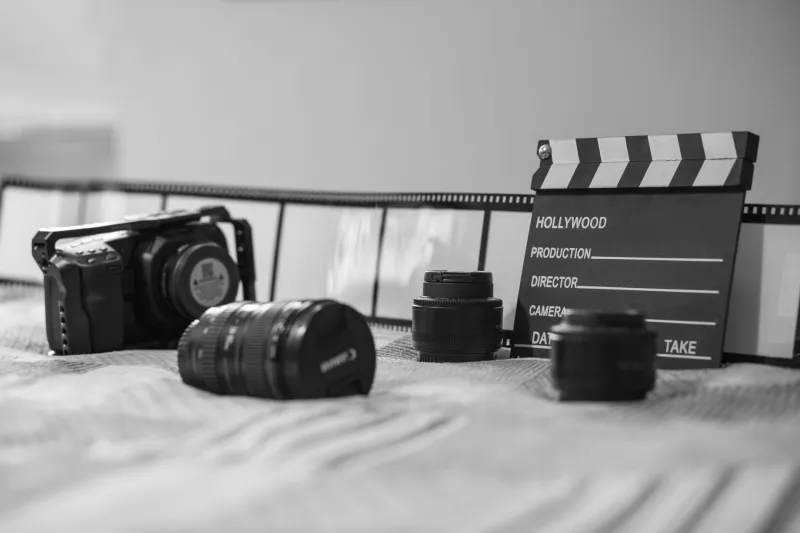
Somewhere along the way, we started confusing craft with vision. They're related, obviously — you need some level of craft to execute a vision — but they're not the same thing, and the entertainment industry has spent the better part of a decade acting like they are. The result is a landscape full of content that is technically impressive, emotionally inert, and completely forgettable the moment the credits roll.
This is the Cult of Competence. And it's slowly suffocating the thing that makes art worth having in the first place.
What Competence Actually Looks Like Now
Pick a prestige drama from the last three years. Any one. Odds are it has beautiful cinematography. A well-paced script. Strong performances from recognizable actors. Solid sound design. A score that knows exactly when to swell. It checks every box that criticism has traditionally used to identify quality.
And yet, a few months after the finale, you probably can't remember what it was actually about. Not the plot — the point. What it was trying to say about being human. What risk it took that could have failed. What moment genuinely surprised you in a way that felt earned rather than engineered.
That's competence without vision. It's a show that knows exactly how to be a show. It just doesn't know why.
This is the defining aesthetic of our current moment. Not bad content — technically accomplished content that has been so carefully calibrated to avoid alienating anyone that it has also avoided meaning anything in particular.
How We Got Here
The shift didn't happen overnight, and it wasn't purely cynical. Some of it came from a genuine democratization of craft — better filmmaking tools, better training programs, better access to industry knowledge. The floor for "technically acceptable" got raised significantly, which is genuinely good. But in raising the floor, we also quietly lowered the ceiling for ambition.
Streaming economics accelerated this. When you need to retain subscribers across a global audience, the incentive is to produce content that offends no one, challenges no one, and asks nothing of the viewer. The algorithm doesn't reward bold swings — it rewards completion rates, rewatch potential, and the kind of comfortable engagement that keeps someone from canceling their subscription.
When you build a creative ecosystem around those metrics, you don't get visionaries. You get executors. Talented, well-compensated, technically excellent people who are very good at making the thing the system wants made.
And the system wants content that feels like a meal you've had before, prepared a little better each time.
The Artist Who Gets Rewarded vs. The Artist Who Matters
Spend time in any creative industry and you'll start to notice a gap between the people who get the most opportunities and the people doing the most interesting work. They overlap sometimes, but less often than you'd hope.
The people who get the most opportunities tend to be reliable. They deliver on time, within budget, without drama. Their work is consistent. It fits the brief. It doesn't make anyone in the room uncomfortable. These are genuinely valuable qualities in a collaborator, and I'm not dismissing them.
But "reliable" and "visionary" are different skill sets, and the industry has increasingly structured itself to reward the first while treating the second as a liability. The director who has a singular perspective and strong opinions about how to execute it is now often described — pejoratively — as "difficult." The showrunner who wants to take the story somewhere genuinely unexpected is a "risk." The musician who refuses to optimize their sound for streaming algorithms is "uncommercial."
Meanwhile, the person who can execute a brief cleanly, who understands what the data says audiences want, who won't push back too hard on notes — they get the next project. And the next one. And the one after that.
What We're Training Ourselves to Accept
Here's what concerns me most about this shift: it's not just changing what gets made. It's changing what audiences expect and recognize as good.
When technically proficient but emotionally safe content dominates the landscape, viewers start calibrating their taste to that standard. Things that are genuinely challenging — formally unconventional, narratively risky, emotionally demanding — start to feel "slow" or "weird" or "pretentious." Not because they are, but because we've been so thoroughly trained on a diet of smooth, easily digestible content that anything with texture feels like a problem.
This creates a feedback loop. Audiences shaped by safe content push back on risky work. Studios use that pushback to justify making more safe content. And slowly, the definition of "quality" narrows until it just means "well-executed version of something familiar."
That's not quality. That's just comfort food with better plating.
The Artists Who Are Still Swinging
They exist. They're working in the margins of major studios, in independent film, in self-released music, in prestige TV pockets where someone with enough clout managed to protect a vision. They're the ones whose work you describe not as "well-made" but as "unlike anything I've seen before" or "I don't know if I loved it but I can't stop thinking about it."
That second kind of response — the unsettled, uncertain, can't-quite-categorize-it response — is actually a much better sign of real creative achievement than "I really enjoyed that." Enjoyment is easy to manufacture. Genuine provocation is hard, and it requires someone willing to risk being wrong in public.
The industry doesn't make it easy for those people. But they're still out there, and they deserve the same attention we give to the perfectly competent shows we'll forget by spring.
Asking More of What We Watch
If you work in a creative field, this matters to you practically. The more the industry normalizes competence as the ceiling, the harder it becomes to make a case for taking real creative risks — in your own work, in pitches, in the projects you choose to attach yourself to.
The pushback has to come from both sides. From creators who refuse to sand down the edges of their vision just to make a project more palatable. And from audiences who are willing to sit with something difficult long enough to let it actually do something to them.
Polished and soulless is easy to produce. It's also easy to consume. But easy has never been the point of art. The point is to make something that couldn't have been made by anyone else, that says something that needed to be said, that takes a shape the world didn't have before.
We should probably start demanding that again.