When Fandom Becomes a Bouncer: The Ugly Side of Protecting What You Love
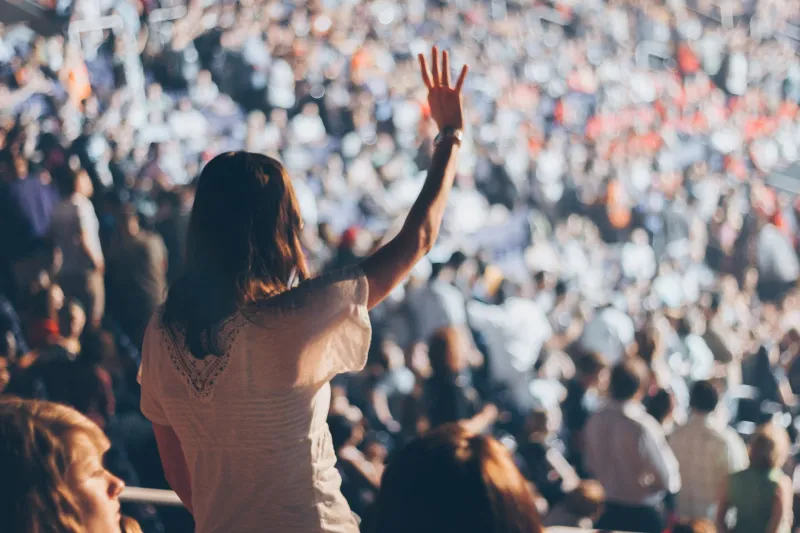
Imagine you've just discovered something you love — an older film franchise, a band from a decade before you were born, a TV show everyone keeps telling you is essential. You're excited. You want to talk about it. So you go online, find the community, and instead of a welcome mat, you walk into an interrogation.
How long have you been a fan? Did you know about them before the mainstream picked them up? Which era do you actually like? Can you name every album in order? Do you even really get it?
This is gatekeeping. And while it's been part of fandom culture forever, something has shifted in recent years that's made it sharper, more organized, and honestly more exhausting for everyone involved — including the people doing it.
Nostalgia as a Membership Card
Here's where it gets interesting: a lot of the most intense gatekeeping isn't about a creator or franchise's current work. It's about memory. Specifically, the memory of discovering something before it was cool, or before it was rebooted, or before it got popular enough to attract people who don't care about it the "right" way.
Nostalgia is a powerful emotional experience. When something was part of your formative years — when a band's album got you through a breakup, when a film series defined your whole aesthetic in high school, when a show was appointment television with people you loved — it becomes tangled up with your personal history in ways that feel almost sacred.
The problem is that sacred things invite protection. And protection, when it's applied to culture, often curdles into exclusion.
When someone says "you don't really understand this because you didn't grow up with it" or "you're only here because of the reboot," what they're often actually saying is: my memories of this thing are precious to me, and your presence feels like a threat to them. That's a human feeling. But it's also a feeling that, left unchecked, turns fandom spaces into something genuinely hostile.
The Newcomer Problem
Let's talk about what gatekeeping actually costs, because it's not abstract.
Every major franchise, band, or cultural phenomenon that has survived more than a decade has done so because it kept attracting new audiences. New audiences bring new money, new energy, new interpretations, and new creative pressure on the people making the work. Without them, beloved properties don't get sustained — they get preserved, which is a very different thing. Preservation is a museum. Sustaining something means it lives.
When newcomers are made to feel like they haven't earned their place in a fandom — when they're quizzed, mocked for gaps in their knowledge, or told their enthusiasm is inauthentic — many of them just leave. They find communities that are more welcoming. They move on.
And the gatekeepers are left with exactly what they wanted: a smaller, purer space with fewer people in it. A community that's slowly aging out, cut off from the fresh interest that would have kept it alive.
This has played out visibly in music fandoms, in comics communities, in gaming spaces, and in the passionate protective circles that form around cult films or niche TV shows. The more aggressively a community polices its borders, the more it tends to calcify.
The Franchise Dimension
For entertainment industry properties specifically, this creates a complicated dynamic that studios and labels are actively trying to navigate.
When a franchise gets rebooted or expanded — a new film in a beloved series, a continuation of a canceled show, a modern adaptation of a classic — the hardcore original fanbase often reacts with immediate suspicion. Sometimes that suspicion is warranted. Plenty of reboots are cynical cash grabs with no real understanding of or respect for the source material.
But sometimes the suspicion is just protectiveness dressed up as criticism. The reboot could be good, or at least earnest, and it would still be rejected by a segment of the original fandom simply because it represents change — new people coming in, new interpretations being offered, the beloved thing becoming a little less exclusively theirs.
This puts studios in a strange position. Lean too hard into the nostalgia audience and you alienate potential new fans. Try too hard to modernize and you lose the original base. The backlash to either choice is often framed as a quality argument, but underneath it, there's frequently just a territorial one.
What's Actually Being Protected
It's worth asking, gently, what the gatekeeping impulse is really guarding.
In some cases, it's genuine quality standards — a desire for the work to be treated with care and seriousness, which is legitimate. In other cases, it's identity. Being an early or dedicated fan of something can become part of how you understand yourself. Your taste becomes your personality. The community becomes your people. When that community starts to expand, it can feel like a dilution of something that mattered.
That's understandable. It's also something worth examining, because identity built entirely around consumption — around being a fan of the right things in the right way — is fragile in ways that aren't always obvious until the franchise you've built yourself around changes in a direction you didn't choose.
Making Room Without Losing the Thread
None of this means that all criticism of reboots is gatekeeping, or that having strong opinions about your favorite creative work is a problem. Passion is good. Standards are good. Wanting the things you love to be treated well is completely reasonable.
But there's a meaningful difference between saying "I think this new direction misses what made the original great, and here's why" and saying "you're not a real fan because you only showed up after the Netflix adaptation."
One is criticism. The other is a velvet rope.
The best fan communities — the ones that actually sustain the things they love over time — are the ones that figured out how to hold their history lightly enough to let new people in. They teach instead of quiz. They share instead of gatekeep. They understand that their memories don't become less real just because someone else is making new ones alongside them.
That's a harder thing to build. But it's the version of fandom that actually keeps the things it loves alive.