The Emotional Crash Nobody Warns You About After a Deep Content Spiral
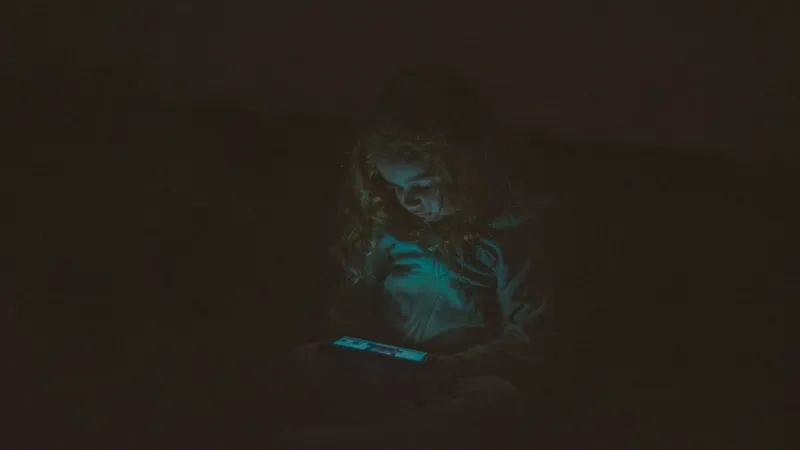
You know the feeling. You've just finished a creator's entire back catalog — maybe it was a docuseries, maybe it was three years of vlogs, maybe it was a reality show you told yourself you'd only watch one episode of. You close the laptop or put down your phone, and instead of feeling entertained or satisfied, you feel... weird. A little flat. Vaguely sad in a way you can't quite explain.
That's not a you problem. It's actually a pretty predictable psychological response to something we do constantly but almost never examine clearly.
What Just Happened in Your Brain
Human brains are not great at distinguishing between real relationships and simulated ones. This isn't a flaw — it's actually an ancient feature. Our social cognition evolved to respond to faces, voices, emotional cues, and repeated exposure to the same individuals. For most of human history, if you were seeing someone's face every day and hearing their voice regularly, they were in your life. Your brain treated them accordingly.
Streaming and social media have completely broken that assumption. You can spend hundreds of hours with someone — learning their speech patterns, their fears, their family dynamics, their sense of humor — without ever being in the same room. Your brain still does what brains do: it starts to process that person as a real social bond.
Researchers call this a parasocial relationship. It's one-directional by design. The creator doesn't know you exist. But your nervous system doesn't fully register that asymmetry.
So when the content ends — when you've watched everything, or the show gets canceled, or you just close the app — your brain experiences something that resembles a social loss. Not a devastating one, but a real one. A small grief. A mild withdrawal.
That's the crash.
Why Reality TV and Docuseries Hit Different
Not all content creates this effect equally. Scripted dramas with fictional characters can produce parasocial attachment too, but there's a ceiling on it — you know, on some level, that you're watching something constructed.
Reality television and documentary-style content are more insidious because they blur that line deliberately. The entire premise is this is a real person, and this is really happening. The emotional investment is structured to feel legitimate because it's framed as real intimacy.
But here's the thing: even the most "unfiltered" reality content is shaped by editing, casting, production incentives, and the very human tendency of subjects to perform for cameras. The intimacy is real in some ways and completely manufactured in others. You're not getting the whole person — you're getting a version of them designed to generate maximum engagement.
When you binge that content, you absorb a lot of emotional data about a person who is simultaneously real and not-real in ways that are genuinely hard to parse. When it ends, you've processed a significant amount of social-emotional information with nowhere to put it.
The Manufactured Intimacy Problem
Some creators are very good at engineering the feeling of closeness. The confessional camera angle. The whispered, late-night voice memo. The "I've never told anyone this before" moment. These are techniques — not necessarily cynical ones, but techniques nonetheless.
The problem isn't that creators use them. The problem is that audiences often don't realize they're responding to a structure rather than an actual relationship. You feel like you know someone. You feel genuinely concerned for them. You feel proud when they succeed. These are real feelings. But the relationship that generated them isn't mutual, and the "intimacy" was partially engineered.
Recognizing that doesn't mean the content was bad or that your response was stupid. It just means you were human in a media environment that is increasingly optimized to exploit exactly that humanity.
Signs You Might Be Running on Empty
The post-binge crash looks different for different people, but some common signs are worth noticing:
- You feel a vague, directionless sadness after finishing a series or creator's content archive
- You find yourself checking a creator's social media reflexively, almost like checking in on a friend
- Real-life social interactions feel slightly less interesting or stimulating than the content you've been consuming
- You feel genuine anxiety or distress about things happening to a creator or character you've never met
- You have trouble remembering what you used to do with your time before this particular content spiral
None of these are signs of a serious problem on their own. But they are signals worth paying attention to.
Recalibrating Without Quitting Everything
The answer isn't to swear off all long-form content or feel guilty for getting invested in creators you admire. That's an overcorrection, and it ignores the fact that some of this engagement is genuinely positive — it can build community, spark creativity, and provide real comfort.
The goal is awareness, not abstinence.
A few things that actually help: deliberately varying what you consume so that no single creator or show becomes your entire media diet. Taking actual breaks between episodes rather than letting autoplay make that decision for you. Noticing when you're consuming content to feel connected rather than because you're genuinely enjoying it — those are different things, and the latter tends to leave you emptier.
It also helps to reinvest in actual social relationships after a big content spiral. Not because YouTube is bad for you, but because real relationships — even small, low-stakes ones — give your social brain something it can actually metabolize.
The crash is real. You're not imagining it. But it's also information — a signal from your own nervous system that it's time to come back to yourself for a little while.