The Main Character Pass: Why We Let Our Favorites Get Away With Everything
There's a version of this you've probably lived through. A creator or celebrity you genuinely like does something that, if a stranger did it, would make you immediately write them off. Maybe it's a resurfaced old post. Maybe it's the way they handled a public conflict. Maybe it's a pattern you've been half-noticing for a while but kept filing under "complicated."
And then you find yourself doing the mental gymnastics. Context matters. They've grown. Nobody's perfect. You don't know the full story. All of which might be true — but you also know you wouldn't extend the same interpretive generosity to someone you didn't already love.
That gap, between how we evaluate strangers and how we evaluate our favorites, is where something psychologically interesting is happening.
How We Learned to Root for Flawed Protagonists
Decades of prestige television and morally complex storytelling have trained American audiences to sit with deeply flawed protagonists. We watched Walter White cook meth and felt something adjacent to admiration. We followed Tony Soprano through acts of genuine brutality and still wanted him to be okay. We've been taught, narratively, that the protagonist's flaws are part of the story — that complexity is a feature, not a disqualifier.
That's a genuinely valuable thing to learn in the context of fiction. It builds empathy. It teaches nuance. It resists the simplistic moral binaries that make for bad storytelling and bad thinking.
The problem is that we've started applying narrative logic to real people. And real people aren't characters in a story with a coherent arc and a showrunner making sure their flaws serve a larger purpose. Real people are just people — sometimes growing, sometimes not, sometimes causing harm they'll never fully reckon with.
When we cast a celebrity or creator as the protagonist of our cultural attention, we unconsciously grant them what you might call a main character pass: the narrative benefit of the doubt that we extend to flawed heroes precisely because we want the story to come out okay.
The Protagonist Halo
Psychologists have documented something called the halo effect — the tendency to let one positive trait color our perception of everything else about a person. If someone is attractive, we assume they're also competent. If someone is funny, we assume they're also kind.
In the fan context, this gets amplified by familiarity. Years of following someone's content creates a sense of knowing them that isn't really knowledge — it's the accumulation of a curated performance. But the emotional weight of it feels like knowledge, and so when something troubling surfaces, we run it through a filter built from all those years of goodwill.
The math almost never works in favor of accountability. The goodwill account is too full. The withdrawal is too small. We round down to fine.
The Accountability Double Standard in Action
Here's a useful test. Think about a public figure you actively dislike — an entertainer, an influencer, a public personality who just rubs you the wrong way. Now think about something mildly problematic they did. How quickly did you arrive at a verdict?
Now think about someone you love. Same category of behavior. How long did you spend looking for the explanation that made it okay?
The gap in processing time is the double standard. It's not unique to fans — it's a basic feature of how human cognition works. We're motivated reasoners, and our motivations are shaped by our attachments. But the creator economy has figured out how to deepen those attachments strategically, which means the double standard gets exploited at scale.
Creators who have built genuine intimacy with their audiences — through vulnerability, consistency, shared humor, parasocial closeness — have effectively inoculated themselves against a certain level of accountability. Not because they've earned that inoculation through good behavior, but because the emotional bond makes accountability feel like betrayal.
When Rooting for Someone Becomes Protecting Them
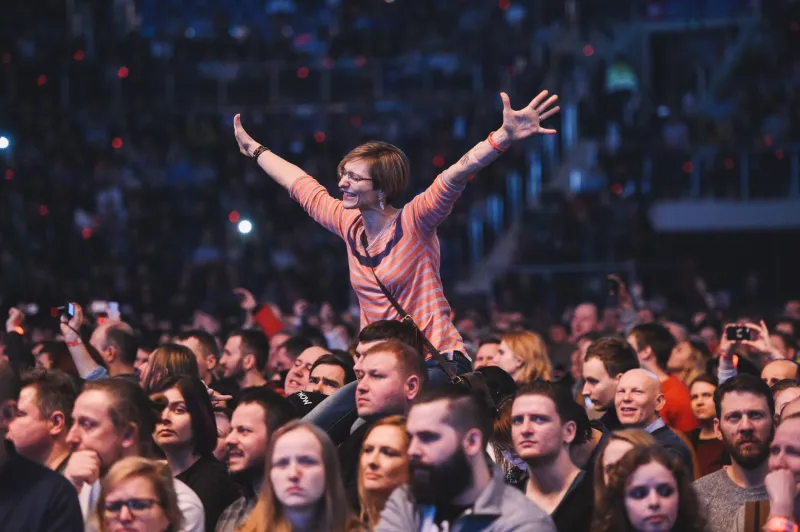
Fandom communities often function as informal reputation management operations. When something damaging surfaces about a beloved figure, the community mobilizes — not always to investigate whether it's true, but to contextualize, minimize, and counter-narrative it into something survivable.
This is especially visible in music and creator spaces, where fandoms have developed sophisticated vocabularies for dismissing criticism: "You don't know the full story." "This is just haters." "They already addressed this." "Why are you even bringing this up right now?"
Some of that skepticism is healthy. Public figures do get targeted unfairly. Context does matter. But there's a meaningful difference between demanding evidence before rendering a verdict and reflexively defending someone because the alternative — that someone you love did something genuinely bad — is too uncomfortable to sit with.
The discomfort is information. It's worth sitting with it instead of rushing to resolve it in the direction that feels best.
Holding the Complexity Without Losing the Standard
Loving something someone made doesn't obligate you to love everything they are. The music can be real even if the person who made it is complicated. The content can have mattered to you even if the creator turned out to be someone you can't fully endorse.
What narrative logic gets wrong when applied to real life is the assumption that a person's flaws are building toward something — a lesson, a redemption, a payoff. Sometimes they're just flaws. Sometimes people don't grow. Sometimes the arc doesn't resolve.
You can appreciate what someone created and still hold them to a basic human standard. Those two things don't cancel each other out. The main character pass is something you give — which means it's also something you can choose not to.