We Stopped Watching the Work and Started Watching the Worker
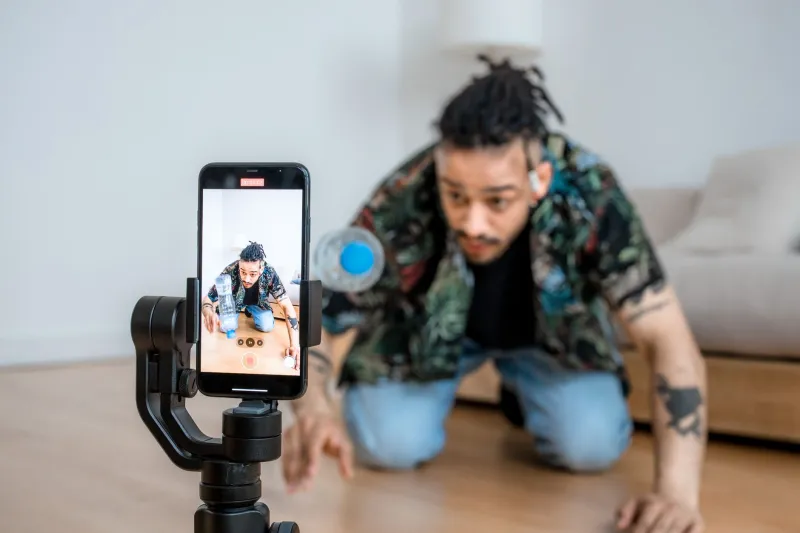
There's a musician I've followed for years. She puts out music that genuinely stops me mid-scroll — the kind of songwriting that feels like it was pulled directly out of your own chest. But lately, when I check in on her social media, the comments aren't about the songs. They're about her ex. About whether she's okay. About a cryptic Instagram Story she posted at 2 a.m. that everyone is convinced is a reference to something that happened at a party she wasn't supposed to be at.
Her last album got 40,000 streams. A TikTok of her crying in her car got 4 million views.
Something has gone sideways.
When the Artist Became the Content
For most of entertainment history, audiences had a relatively clean transaction with creators: you made something, they consumed it, they decided if they liked it. The work was the point. The person behind it was a bonus — a face on a poster, a bio in a program, a magazine profile you might read if you were especially curious.
Social media obliterated that separation almost completely.
Platforms built on daily posting cycles, Stories that expire in 24 hours, and algorithmic rewards for emotional disclosure have turned creators into living, breathing reality shows. The audience doesn't just follow the work anymore — they follow the person making it. And increasingly, the person is more engaging than anything they could actually produce.
This isn't an accident. It's by design. Platforms profit from intimacy. The more a creator shares, the more the audience feels connected, the more they return, the more ads get served. Parasocial investment — that sense of one-sided closeness — is essentially the business model.
The Metrics Don't Lie, But They Do Mislead
Creators aren't oblivious to what's happening. Many are actively frustrated by it, even as they feel trapped by it.
A filmmaker I spoke with recently described the exhaustion of building an audience for her short films, only to discover that a casual video of her talking about a bad date performed ten times better than the trailer for her latest project. "I spent eight months on that film," she said. "People watched it. But they shared the date video."
The analytics make the lesson brutally clear: vulnerability and personal drama generate engagement. Craft and artistry generate respect, maybe. The two aren't the same currency, and in an attention economy, engagement is the one that pays.
This creates a genuinely cruel incentive structure for anyone trying to build a creative career right now. You can spend years developing a skill — writing, filmmaking, music production, illustration — and still find yourself outperformed, in pure platform terms, by a candid conversation about your therapy session.
What We're Actually Hungry For
Here's the thing, though: I don't think audiences are shallow. I think they're lonely.
The obsession with creators' personal lives isn't really about voyeurism, or at least not only about that. It's about connection. People are looking for someone who feels real, who has struggles they recognize, who seems like they might actually understand what it's like to be a person right now. In a media landscape historically dominated by polished, untouchable celebrity, the raw creator talking into their phone at midnight feels like a revelation.
The problem isn't that audiences want authenticity. The problem is that the platforms have trained us to find authenticity in disclosure rather than in work. A song that lays your heart bare is authentic. So is a breakdown video. But only one of them requires craft, patience, and years of practice.
We've drifted toward the easier version.
The Creator Trapped Inside the Character
What this shift produces, over time, is a strange kind of trap. Creators who build audiences on personal content find themselves locked into a character — themselves, but amplified and curated for consumption. Every life event becomes potential content. Every relationship is watched. Every bad day is an opportunity for engagement.
Some creators lean into it and burn out. Others try to pull back and lose followers. A few manage to somehow thread the needle, keeping some private life actually private while still feeding the machine enough to stay relevant. But none of those options are particularly sustainable, and none of them are really about the work.
There's also a generational dimension here. Younger creators, the ones who grew up with social media as a given, often struggle to separate their identity as an artist from their identity as a content creator. The two have always been fused for them. Which makes it harder to ask: what would I make if no one was watching me make it?
Reclaiming the Work Without Abandoning the Audience
I don't think the answer is for creators to go dark, delete their accounts, and release work into the void. That's not realistic, and frankly, the genuine connection that social media enables between artists and audiences isn't without value.
But there's a difference between sharing your process and performing your life. There's a difference between letting people into your creative world and turning your personal world into the product.
The creators I find most compelling right now are the ones who've figured out how to use the platforms on their own terms — sharing enough to feel present without handing over everything. They talk about the work. They show the thinking behind it. They let you see the struggle, but the struggle is in service of something being made, not just struggle for its own sake.
That distinction matters. It's the difference between an artist who happens to have a social media presence and a social media presence that occasionally produces art.
What Gets Lost When the Person Overshadows the Product
The long-term cost of this inversion is harder to quantify but worth taking seriously. When audiences are more invested in a creator's personal life than their actual output, the incentive to develop deep craft quietly erodes. Why spend two years writing a better book when a well-timed emotional post will outperform it anyway?
Storytelling, filmmaking, music — these are skills that require sustained, often invisible labor. They don't always translate into compelling daily content. A novelist deep in revision isn't doing anything particularly watchable. A songwriter struggling with a bridge for three weeks doesn't have a shareable moment. The work that's hardest to make is often the least visible in its making.
If we only reward what's visible, we risk losing what isn't.
The pendulum has swung hard toward the personal, and I'm not sure it's coming back on its own. But I do think there's space — and real appetite — for audiences who want to fall back in love with the work itself. With the thing made, not just the person making it.
Some of us still get chills from a song before we know anything about the person who wrote it. That reflex isn't dead. It just needs somewhere to land.