The Closer You Get, the Further Away They Are: Understanding the Parasocial Trap
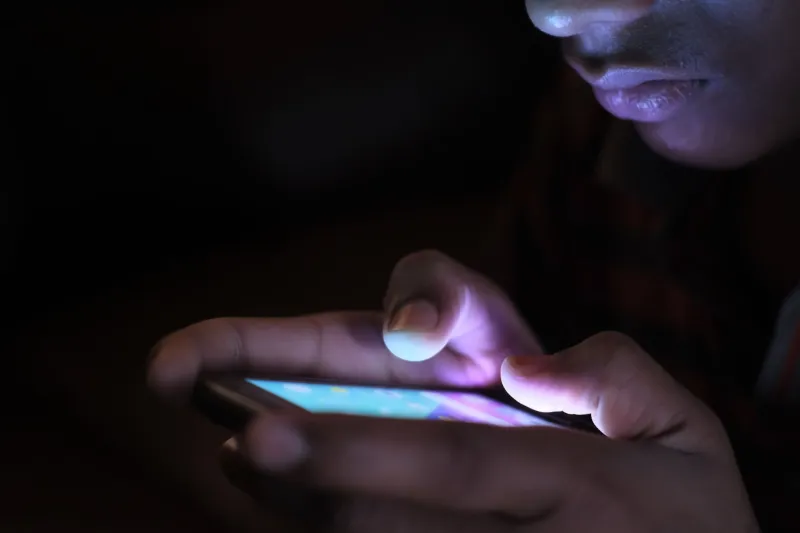
Let's say you've been following someone online for two years. You've watched their vlogs, caught their live streams at midnight, maybe even sent a message they actually responded to. You know their coffee order, their dog's name, the city their mom lives in. You've watched them cry. You've watched them laugh until they couldn't breathe.
And yet — if you're being honest — you don't actually know them at all.
That gap between how close you feel and how close you actually are has a name. It's called a parasocial relationship, and most people who have one don't fully realize what it's doing to them.
The Math That Makes This So Weird
Here's the thing about parasocial dynamics that most conversations skip over: the relationship isn't static. It changes as access increases. And the change doesn't go in the direction you'd expect.
When a creator is relatively inaccessible — posting once a week, limited personal content, no direct audience interaction — there's a natural distance that fans understand and accept. The parasocial bond is real, but there's no illusion of reciprocity. You watch, you enjoy, you move on.
But then the creator opens up. They start doing daily stories. They go live. They respond to comments. They post the unfiltered stuff. And something shifts — not toward closeness, but toward a more sophisticated version of the same distance dressed up as intimacy.
The more access you get, the more detailed your mental model of this person becomes. But the model is still built entirely from what they've chosen to show you. You're not getting closer to the real person. You're getting closer to a higher-resolution version of their public self. And the danger is that the resolution is now good enough to feel like the whole picture.
Curated Vulnerability Is Still Curation
One of the most effective creator strategies of the last decade has been strategic vulnerability. Sharing something personal — a health struggle, a relationship breakdown, a moment of self-doubt — creates an enormous spike in connection and loyalty. It feels like the wall came down. It feels like you're seeing the real them.
But vulnerability, when it's deployed on a content calendar, is still a content decision. That doesn't mean the emotion isn't real. It might be completely genuine. But the decision about what to share, when to share it, and how to frame it is still a professional choice made by someone who understands their audience.
This is the part that's hard to hold onto: a creator can be completely sincere and still be performing. Both things can be true at once. And when we forget that, we start filling in the blanks with assumptions — about who they are when the camera's off, what they'd be like in person, whether they'd actually like us if they met us.
Spoiler: we don't know any of that.
Why More Access Sometimes Feels Like Less
A lot of longtime fans describe a specific kind of disillusionment that kicks in around the time a creator starts doing more. More content, more platforms, more interaction. And instead of feeling more connected, the fan starts feeling vaguely disappointed without being able to explain why.
What's happening is a collision between the idealized version of the person — built up over years of selective exposure — and the messier, more human reality that starts leaking through with increased access. When you only see someone once a week, they can be almost anything in your imagination. When you see them every day, the fantasy has to compete with actual evidence.
The closer you get, the more human they become. And for parasocial relationships, humanity is kind of a problem — because the bond was never really built on who they are. It was built on who you needed them to be.
The DM That Didn't Save You
Nothing crystallizes this quite like the experience of getting a response from a creator you follow. You send a message, maybe something heartfelt, and they reply. Even something short — a heart emoji, a "thank you so much" — can feel genuinely significant in the moment.
And then, within a few days, you're back where you started. Maybe worse, because now you've had a taste of actual contact and it didn't do what you thought it would.
That's the asymptote in action. An asymptote, for those who blocked out high school math, is a curve that gets closer and closer to a line without ever actually touching it. You can keep moving toward it indefinitely and the distance never fully closes. That's parasocial relationships in a nutshell. More access, more content, more interaction — and the real, mutual, reciprocal connection you're unconsciously seeking stays just out of reach.
What You're Actually Looking For
This isn't about shaming anyone for following creators closely or feeling genuine warmth toward people whose work has meant something to you. That's human. That's normal. Entertainment and storytelling have always created bonds between audience and artist, and those bonds have real value.
The issue is when the parasocial relationship starts functioning as a substitute for something else — real community, real friendship, real intimacy with people who are actually in your life. When the feeling of knowing a creator starts to fill a space that should be occupied by people who actually know you back.
The most useful thing you can do with a parasocial relationship is enjoy it for what it is: a one-directional connection to someone's work and public persona that can genuinely enrich your life without being the center of it.
The Honest Version of Fandom
Fans who seem to have the healthiest relationships with creators tend to share one trait: they're clear-eyed about the nature of the thing. They enjoy the content, they feel the connection, and they also understand that the person on screen is a version of a person — not the whole one.
That clarity doesn't diminish the enjoyment. If anything, it protects it. Because when you're not chasing a closeness that structurally cannot be achieved, you stop being disappointed by every reminder that it doesn't exist.
You can love someone's work, appreciate their presence in your life, and still know that you don't actually know them. Those things can coexist.
The parasocial asymptote will always be there. The question is whether you're running toward it or just walking alongside it, knowing exactly what it is.