The More You Know, The Less You Feel: How Behind-the-Scenes Culture Killed the Magic of Art
There's a moment in every magic show — right before the reveal — where your brain is doing two completely opposite things at once. Part of you wants to know the trick. The other part knows, somewhere deep down, that learning it will ruin everything.
We chose to learn the trick. All of it. Every time.
Somewhere in the last decade, we collectively decided that access was the same thing as appreciation. That watching a filmmaker break down their shot choices on YouTube made us better viewers. That following a novelist's daily word count on Substack made us more invested in the finished book. That seeing a musician produce a track in real time on TikTok made the album drop feel more meaningful.
It didn't. And honestly? It kind of couldn't.
How We Got Here
The behind-the-scenes industrial complex didn't appear out of nowhere. DVD bonus features started it — remember sitting through forty-five minutes of cast commentary on your favorite movie because you just had to know what the director was thinking during that scene? That felt special because it was optional, packaged, and came after you'd already experienced the finished thing.
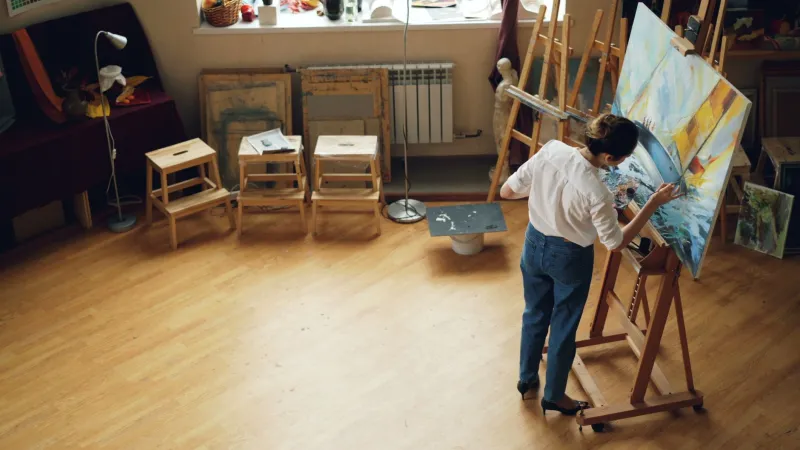
Then social media handed every creator a direct line to their audience, and suddenly the process became the product. Instagram stories showing a painter mid-canvas. YouTube vlogs documenting a screenwriter's room. Discord servers where fans watch an indie game developer debug code in real time. The finished work stopped being the main event. The journey became the content.
And platforms rewarded it. Heavily. Audiences engaged more with process content than with polished releases. So creators gave them more process. More rawness. More access. The behind-the-scenes became the front door.
The Familiarity Problem
Here's the psychological catch nobody really warned us about: familiarity and awe don't coexist easily.
Awe requires a gap — some distance between what you understand and what you're experiencing. It's that moment where something exceeds your ability to fully explain it, and your brain just... opens up. Researchers call it a sense of vastness. It's why standing at the edge of the Grand Canyon hits differently than looking at a photo of it. Proximity and context collapse that gap.
When you've watched a director spend six months complaining about budget constraints, second-guessing casting decisions, and losing sleep over a single scene — and then you sit down to watch the finished film — your brain isn't approaching it fresh. It's fact-checking. You're not watching a story unfold; you're auditing a production you already know too much about.
The mystery is gone before you even buy the ticket.
It's Not Just Audiences — Creators Feel It Too
This isn't purely a consumer problem. Creators are stuck in it just as much.
When your process is public, the process becomes performance. You're not just making the thing — you're making content about making the thing, simultaneously. That's a split focus that would exhaust anyone, and it quietly changes what gets made. Decisions start getting filtered through a second lens: how will this look when I talk about it later? The work bends, even slightly, toward its own documentation.
Some artists have started pushing back. Beyoncé is famously private about her creative process — you get the album, not the diary. Kendrick Lamar doesn't do the press circuit that most artists treat as mandatory. There's a reason their releases still feel like events. The silence is doing something. It's preserving the gap.
Nora Ephron once said she never talked about what she was working on because talking about it released the pressure that was supposed to go into writing it. That was before the era of mandatory content creation, but the instinct was right. There's a finite amount of energy in any creative act, and some of it is getting spent on the documentation instead of the work itself.
We Trained Ourselves to Consume, Not Experience
There's a difference between consuming art and experiencing it, and behind-the-scenes culture has quietly shifted most of us into permanent consumption mode.
Consuming is active and analytical. You're gathering information, forming opinions, cataloging references. Experiencing is something closer to surrender — letting a piece of work move through you before your critical brain catches up. The best artistic moments most of us can remember probably happened in that second mode. A song that stopped you cold. A film ending you didn't see coming. A book that made you miss your subway stop.
Those moments require a certain kind of openness that's genuinely hard to access when you've pre-loaded your brain with context. If you already know a movie's ending was controversial on set, you're watching for the controversy. If you know a song was written during a breakup, you're listening for the heartbreak instead of just feeling it.
We've essentially given ourselves spoilers for the emotional experience of art.
What We Actually Lost
The thing that's quietly disappeared isn't just surprise — it's the specific feeling of encountering something that seems to have arrived from somewhere you can't quite locate. The sense that a piece of work exists outside of ordinary human effort, that it somehow exceeded what any normal process could produce.
That's not a rational feeling. Intellectually, we all know films are made by crews and albums are made by producers and books are made by humans who drink too much coffee and miss deadlines. But there used to be enough distance between the making and the receiving that the irrational feeling had room to breathe.
Now it doesn't. We've fact-checked the magic out of existence.
Finding Your Way Back
None of this means you have to quit the creator vlogs cold turkey or unfollow everyone who posts process content. But it might be worth being a little more intentional about when you consume it.
Maybe the behind-the-scenes deep dive is better after you've sat with the finished work. Maybe some creators are worth keeping at arm's length — not because you don't care, but because the distance is actually serving you. Maybe the director's commentary is best saved for a second watch, when you've already let the film do its thing without interference.
And if you're a creator reading this: you're allowed to keep some of it to yourself. The mystery isn't dishonesty. It's a gift to the people who are going to receive your work — the gift of encountering something they can't fully explain.
That gap? That's where the awe lives. It's worth protecting.